 PCOS Ally
 guides · Cycles
Irregular periods and PCOS: what counts as irregular?
“Irregular periods” is one of the first things people notice with PCOS, and one of the three features doctors look at to diagnose it. But irregular does not mean the same thing to everyone, and the definitions depend on your age and on how long you have had periods. Here is what the main medical references say.
This guide explains published definitions. It is not medical advice and can’t tell you whether you have PCOS. Talk to your doctor about your cycles.
First, how to count a cycle
A cycle starts on the first day of your period, the first day of real bleeding, not spotting. It ends the day before your next period starts. So if one period starts on March 1 and the next on March 31, that cycle was 30 days.
Two numbers describe your cycles:
- Length: how many days each cycle lasts.
- Variation: the difference between your longest and your shortest cycle over several months. This is what “regular” refers to.
What is a normal cycle?
The two references doctors use most don’t draw the line in exactly the same place:
| Reference | Typical length | Regular if |
|---|---|---|
| FIGO (2018) | 24 to 38 days | Longest and shortest cycles differ by up to 9 days at 18 to 25, 7 days at 26 to 41, 9 days at 42 to 45 |
| ACOG | 21 to 35 days | Length varies by no more than 7 to 9 days |
ACOG also lists going 3 to 6 months without a period as abnormal. For teens, ACOG notes that cycles of 21 to 45 days are normal, and that it can take 6 years or more after the first period for cycles to become regular.
How the PCOS guideline defines irregular cycles
The 2023 International Evidence-based Guideline for PCOS uses age since the first period (menarche):
- First year after the first period: irregular cycles are a normal part of puberty.
- 1 to 3 years after: cycles shorter than 21 days or longer than 45 days count as irregular.
- From 3 years after to perimenopause: cycles shorter than 21 days or longer than 35 days, or fewer than 8 cycles a year.
- After the first year, any single cycle longer than 90 days counts as irregular.
Irregular cycles are one of three features in the criteria used to diagnose PCOS in adults, alongside signs of high androgens and polycystic ovaries on ultrasound or a high AMH level. Only a doctor can put these together, and other conditions can cause irregular cycles too.
Track your cycles before your appointment
Doctors ask about cycle length and regularity, so a few months of dates help a lot:
- Write down the first day of every period. That is the one date that matters.
- Note spotting separately, so it doesn’t get counted as a new cycle.
- Add symptoms around your cycle, like acne, mood or bloating, if you notice a pattern.
- Keep going even when a period is late. A long gap is information too.
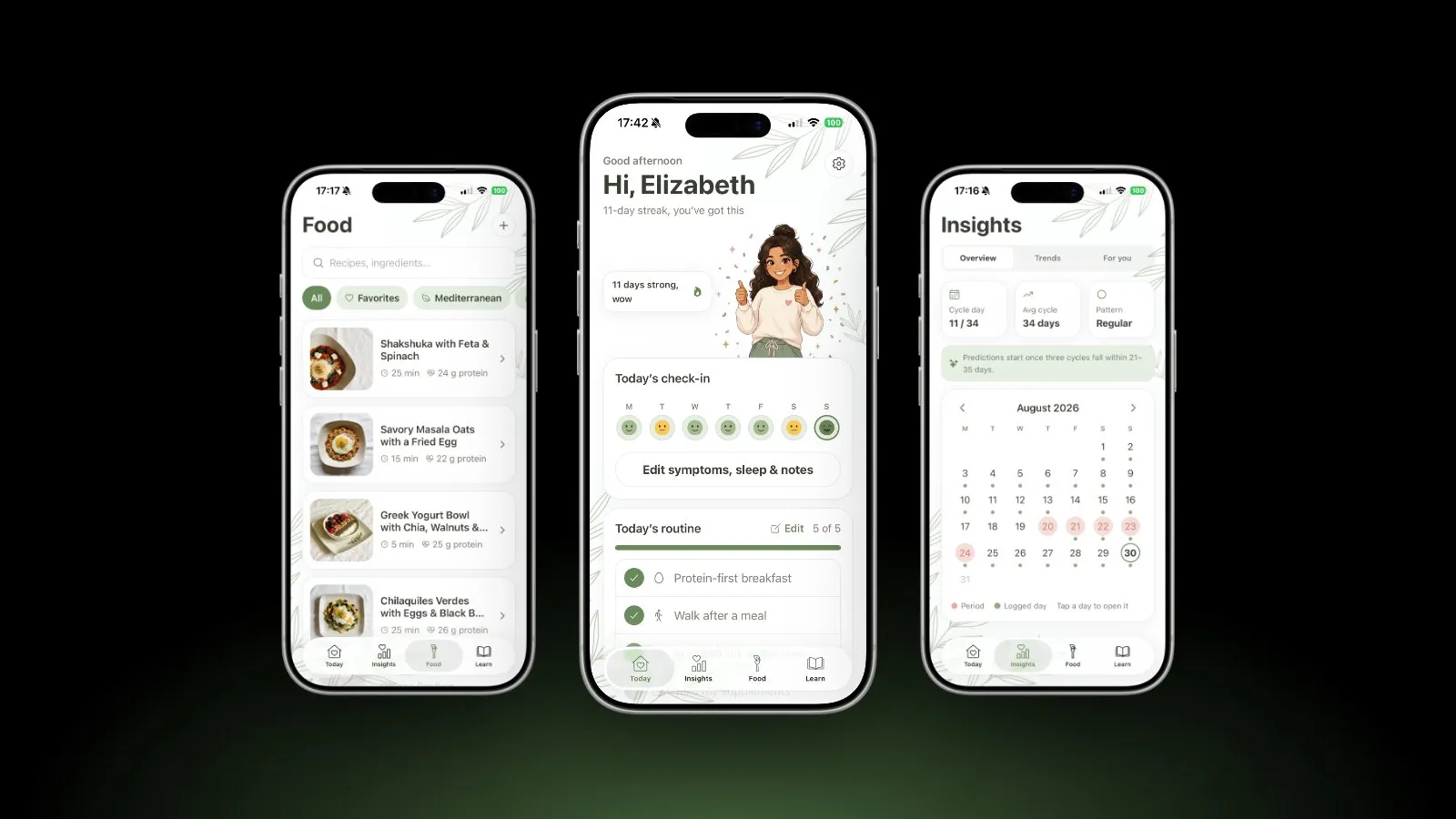
Our free cycle length calculator turns your last period start dates into your average cycle, your shortest and longest, and how much they vary. PCOS Ally keeps a cycle log built for irregular cycles, next to your symptoms, mood, sleep and meals, and puts it on a one-page summary you can bring to your appointment.
Sources
- Munro MG et al., FIGO 2018, The two FIGO systems for normal and abnormal uterine bleeding symptoms
- ACOG, Abnormal Uterine Bleeding and Your First Period
- Teede HJ et al., 2023 International Evidence-based Guideline for PCOS